
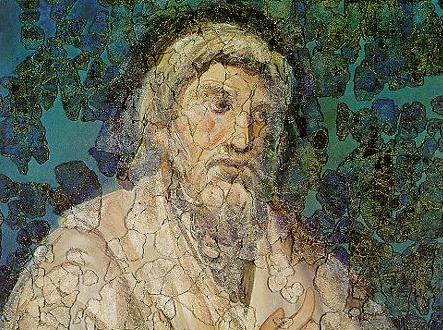
A story can travel far beyond the place in which it was written. Apuleius, the second-century writer from Madauros in present-day Algeria, left a work whose journey through languages and centuries remains extraordinary.
His best-known book, the Metamorphoses, usually called The Golden Ass, follows Lucius, a curious young man accidentally transformed into a donkey. Retaining his human understanding, he passes through a succession of owners and encounters, observing the folly, cruelty, and vulnerability of the people around him. Other stories enter the narrative along the way, including the tale of Cupid and Psyche.
A novel that survived
The Golden Ass is the only ancient Latin novel to survive complete. That distinction should not be confused with the claim that it was the first novel ever written: Greek prose fiction and other earlier narrative traditions also belong to the history of the form.
Apuleius wrote in Latin, working within the intellectual and literary world of the Roman Mediterranean. His North African origins remain an essential part of that setting. His birthplace, Madauros, is the site of present-day M’Daourouch in Algeria.
More than one book
Apuleius was also a philosopher and a public speaker. The surviving works associated with him include the Apologia, a defense against an accusation of using magic, the Florida, and philosophical writings such as On the God of Socrates.
Reading these works together reveals a writer moving between storytelling, argument, performance, and philosophical reflection. His fictional narrator should not simply be treated as an account of the author’s own life.
Dates and legacy
Apuleius was born around 124 CE. The exact date of his death is not known; museum catalogues commonly describe him as living after 170 rather than assigning a certain death year.
For readers interested in Amazigh and North African cultural history, his work opens a window onto a region deeply connected to the ancient Mediterranean. His stories, arguments, and imagined voices remain part of North Africa’s literary heritage, still reaching readers nearly two thousand years later.
Preserved from Agraw’s cultural archive.
From the original article

References
The Metropolitan Museum of Art — Apuleius catalogue entry · Brill — Apuleius Online, texts and scholarly commentary