
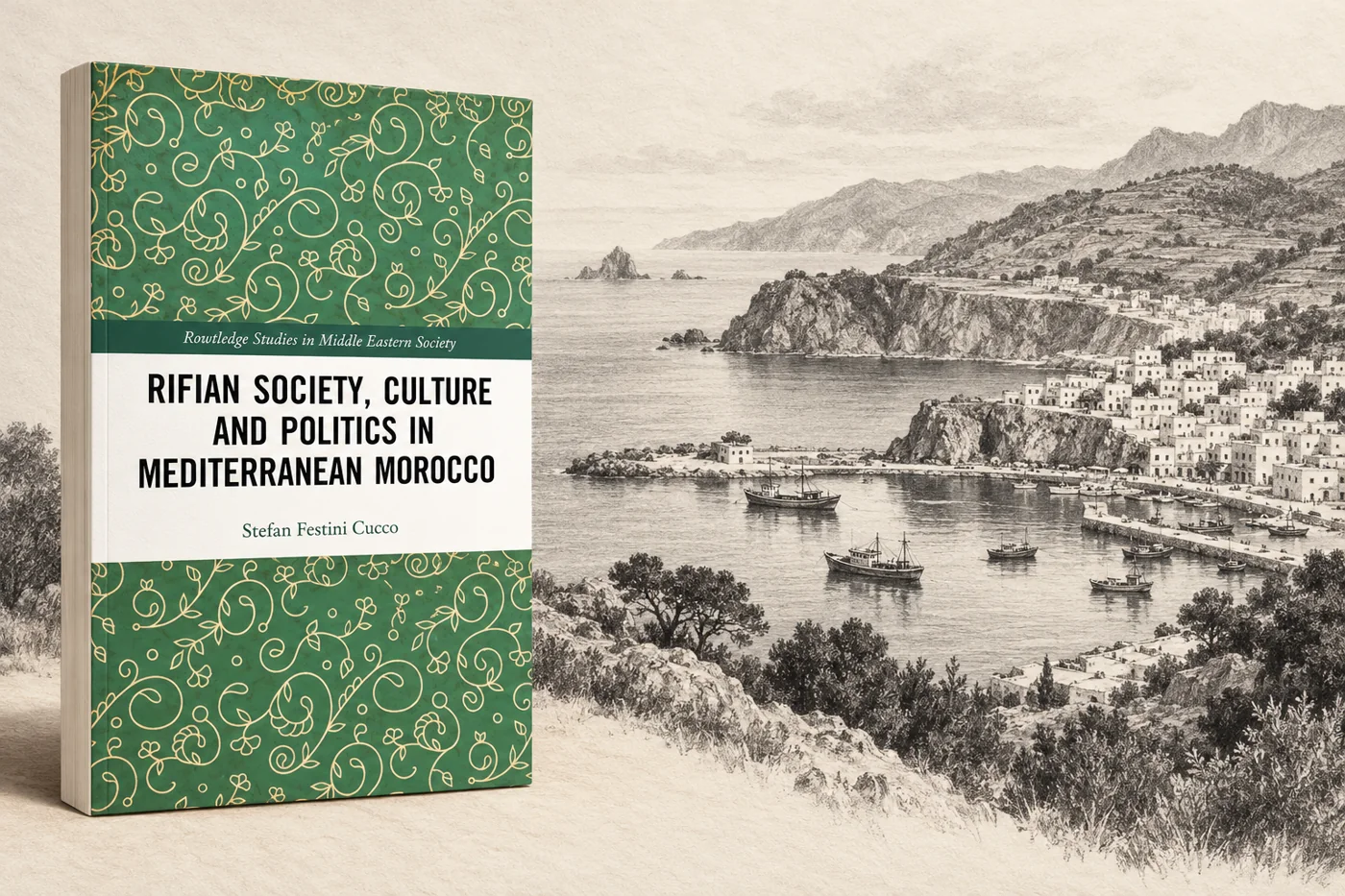
Seen from the shore, the Rif rises in layers: the harbour, the houses, the roads climbing toward the mountains. Yet a landscape holds more than its visible outline. It also holds the journeys that sustain a family, the words exchanged in a market, the memory of a place that has changed, and the future its inhabitants hope to build.
In Rifian Society, Culture and Politics in Mediterranean Morocco, social and cultural anthropologist Stefan Festini Cucco approaches the region through these connections. Published by Routledge in 2025, the book draws on ethnographic fieldwork conducted in 2016–2017, with Al Hoceima and the central Rif at its heart. It asks how people live between mountain and sea, and how that relationship is reshaped by migration, economic change and political power.
A city between worlds
Al Hoceima gives the study its meeting place. Fishing, agriculture, commerce and tourism come into contact here; so do village histories, urban ambitions and lives extending across the Mediterranean. The city is part of a wider Rifian landscape, connected to settlements and communities whose relationships cannot be understood from a coastal view alone.
Festini Cucco moves between the port, markets, cafés, roads and surrounding countryside. The effect is to make geography something lived. A harbour is a place of work and movement. A mountain road carries goods, visits and obligations. A coastline can suggest both an available livelihood and a route toward a life elsewhere.
Culture in the ordinary places
One of the book’s most engaging directions is its attention to settings that rarely enter a postcard: a conversation at a café, a weekly market, a sanctuary, the practical organisation of work. These are places where knowledge circulates and relationships take shape. Culture appears through the things people do together, as well as through the histories they tell.
The discussion of women’s markets is especially suggestive. Changes in an economic institution also change opportunities for meeting, exchange and social contact. Likewise, the book’s attention to the spoken word and to local accounts of the past invites readers to consider how trust, reputation and memory remain active in daily life. These observations open questions about cultural continuity without treating Rifian society as something fixed outside time.
Leaving, returning, remaining connected
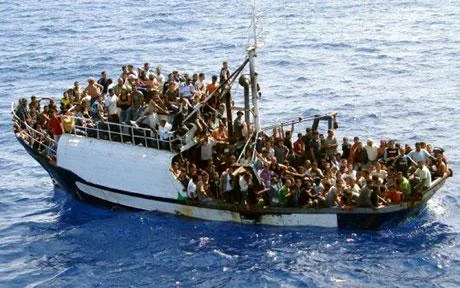
Migration runs through this account as an ongoing relationship. The book follows movements from the mountains toward the coast and beyond, placing contemporary connections with Europe alongside earlier patterns of movement within Morocco and toward Algeria.
Money sent home, summer visits, houses built and expectations carried between generations all become part of the region’s changing social landscape. For readers in the diaspora, these passages may feel particularly close. Departure can alter a person’s relationship with home while leaving responsibilities, attachments and questions of belonging very much alive.
Festini Cucco also asks readers to look beyond the visible signs of a successful return. The promise of Europe, as encountered by young people in his fieldwork, can coexist with uncertainty and a prolonged sense of waiting. His account makes migration a subject of aspiration and unequal possibilities, rather than a simple journey with a settled ending.
Who gets to shape the city?
The book connects changes in Al Hoceima’s built environment with a difficult question: how far do residents participate in deciding what their city becomes? Port redevelopment, tourism infrastructure and urban expansion are examined through local experiences and criticisms, not only through their physical presence.
That question becomes more urgent in the account of the Hirak protest movement of 2016–2017, following the death of fish seller Mohsin Fikri. Festini Cucco interprets the struggle over streets, squares and public space alongside demands for dignity, opportunities and participation. These chapters belong to the historical period of the research; they should not be mistaken for a current news report on the Rif.
Reading the political chapters beside the earlier discussions of work, migration and memory gives them greater depth. The city’s tensions emerge from the everyday circumstances the book has already brought into view.
Listening also means recognising the limits
The author is explicit about the boundaries of his research. Most of his interlocutors were men, many belonged to an urban middle-class milieu, and women’s perspectives were less represented. Rural experiences were sometimes described through people who had moved to the city. Communication relied largely on Spanish and, to a lesser extent, French, with translation where needed; he acknowledges that stronger knowledge of Tamazight could have deepened the work.
These admissions matter. No single ethnography can stand for every woman and man, every village, or every generation of the Rif. The book is most rewarding when read as a situated contribution: one to place in conversation with Rifian scholarship, women’s accounts, Tarifit-language writing and the memories held within families and communities.
A place worth reading closely
The volume’s photographs give its themes a material setting, from agricultural terraces and fishing boats to market spaces and a changing city. Together with the text, they encourage readers to stay with the details of a place often approached through a small number of familiar images or political headlines.
For Agraw’s readers, the book offers a reason to return to those details with curiosity. It is a contribution to a wider conversation about how the Rif remembers, changes and describes itself. Between mountain and sea are lives that deserve to be understood in their complexity—and a cultural memory that continues to be made.
The book
Rifian Society, Culture and Politics in Mediterranean Morocco
Stefan Festini Cucco
Routledge, 2025 · First edition
Routledge Studies in Middle Eastern Society
Hardback ISBN: 9781032679273
This review draws on the book’s introduction (pp. 1–7), discussions of economic life, migration and urban change (chapters 3, 4 and 6), political analysis (chapter 7), and conclusions (pp. 270–275). The fieldwork dates and methodological limitations are stated by the author in the introduction.
Stefan Festini Cucco, Rifian Society, Culture and Politics in Mediterranean Morocco. Routledge, 2025. doi:10.4324/9781032679303.