
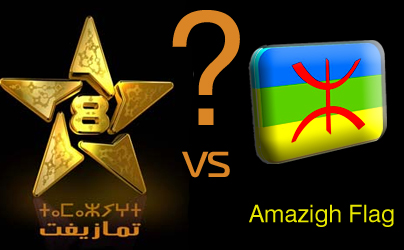
The Moroccan Tamazigh Channel logo on the left & The Amazigh flag on the right
Tamazight TV is the Moroccan official Amazigh channel that was launched on January 6th 2010, satisfying a long-awaited demand by a significant percentage of the country’s citizens.
The Amazigh flag symbolizes Amazigh identity and cultural renaissance. This flag is often described by the misinformed, including the media, as “The anti-National flag.” This is erroneous, the proposal made by the Canary Islands at the First Amazigh World Congress, established the facts behind this universal Amazigh flag. As follows:
“Our struggle needs to fortify our bonds and symbols of unity in all corners where Imazighen are found. For and by them, we propose at this First World Amazigh Congress, the creation of a flag that identifies us. A flag that makes of our struggle a common defense, under which our children will grow freely, under which we feel together with our society, with our people (be we immigrants, continentals, or islanders); A flag which will be the symbol of a reawakening, a password for all Imazighen, wherever they are found. A symbol whose colors and design are drawn from our past, and at the same time guides our destiny, guaranteeing that our children will hoist it permanently wherever a brethren arrives.” Extract from the first Amazigh World Congress.
The following extract of Idir concert, which was broadcasted live from TWIZA festival in Tangier on the 25th of July 2010, shows that Tamazight Channel is escaping to spot the Amazigh flag on the screen. If Tamazight channel doesn’t accept to show the Amazigh flag, which represents the Amazigh culture and identity, then why should the Amazigh people acknowledge this channel?!
Tamazight Channel is also misinformed about the Amazigh flag. This flag has nothing to do with the movements that ask for autonomy or any other external movement. Either we are Moroccans, Mauritanians, Algerians, Tunisians, or Libyans or what so ever… this flag symbolizes only our culture and identity not our nationality.
Preserved from Agraw’s cultural archive.