

A village, a language, a departure: in Walid Mimoun’s work, the intimate experiences of the Rif open onto questions that travel far beyond it. How does a person remain attached to home? What gives a language its place in public life? How can a song carry anger, affection and a demand for dignity without losing its poetry? These questions help explain why his name continues to matter to listeners across generations.
Known also as Mimoun El Walid or El Walid Mimoun, the singer, composer and writer occupies a central place in modern Rifian Amazigh music. His recent recognition at the Twiza festival in Tangier offers an occasion to return to the work itself: the words, the musical choices and the cultural commitment that have given his songs such a durable presence.
From Aït Sidel to the sounds of the Rif
Born in 1959 in Aït Sidel, near Nador, Mimoun grew up in a rural environment closely connected to the land. Biographical accounts place the tamja, the traditional Rifian flute, among his earliest musical experiences. That apprenticeship matters: before the guitar and the public stage, there was already a local vocabulary of melody, breath and memory.
The Rif in his songs is inhabited. Villages, mountains, family relationships and the experience of leaving provide a human scale for larger ideas. For a listener who knows the region, those references can awaken personal memories; for someone encountering it for the first time, they offer a way into its emotional landscape. The strength of that connection comes from giving ordinary lives the attention usually reserved for public heroes.
Philosophy in Fès, and the habit of questioning
After his schooling in the Nador region, Mimoun studied philosophy at the University of Fès. Africultures’ biographical notice connects those student years with his decision to sing in his mother tongue about people pushed to the margins. His educational background belongs to the story of his art: language, injustice and the place of the individual became questions to be examined through song.
A philosophical education does not provide a ready-made explanation for every lyric. It does, however, offer a useful way to approach this repertoire: listen for the question within the statement, for the person behind the collective voice, and for the tension between belonging to a community and asking that community to change. This is one reason his work rewards a slower, attentive hearing.
The recordings that established a new voice
Ajjaj, released in 1980, and Ametluɛ, released in 1986, are recurrent landmarks in accounts of his career. Tayyut, also written Thayyuth, belongs to the following decade. The different spellings found across cassettes, catalogues and online libraries reflect the varied ways Tarifit has been written in Latin characters. They should not obscure the continuity of the artist and his work.
His early career developed during a difficult period for independent Amazigh cultural expression. Published profiles describe restrictions surrounding Ajjaj and pressure on the singer’s student and artistic life. That context helps explain the significance of circulation itself: a recording passed between listeners could carry a language and a set of concerns into spaces where they were seldom represented.
Renewing Rifian music from within its own language
Mimoun helped establish an enduring place for the Rifian singer-songwriter: an artist whose individual voice, guitar and authored text could address a shared experience. His place among the pioneers of modern committed song in the Rif is recognised in cultural writing about his career. For later musicians, that example expanded the possibilities of what an Amazigh song could discuss and how a performer could inhabit the stage.
One way to understand that contribution is to listen for a relationship between words and accompaniment. A memorable melody helps a text travel; space around the voice allows its images to remain audible. The song becomes something a listener can return to, carry away and discuss. In this sense, musical transmission also becomes a form of cultural participation.
Land, migration, dignity and the freedom to belong
Several songs provide entry points into these concerns. Dchar inu, usually rendered as “My village”, is associated with the pain of departure and the attachment to home. His interpretation of Aya Dhar Ubarran revisits a traditional Rifian song connected to the Rif War; the inherited repertoire remains audible within a modern artistic voice. Min naɛna nechin, often translated as “Who are we?”, places identity in the form of a question.
His social concerns also reach inside the community. Accounts of his repertoire identify a critique of patriarchal constraint and forced marriage in Teqqim kh ijen wuẓru. Taken together, these themes invite an understanding of cultural dignity that includes the freedom of the people who carry the culture. Defending a language can accompany a demand for fairer relationships within the society that speaks it.
For Agraw, this is an essential part of returning to his songs today. An attachment to the Rif need not freeze it in an idealised past. Listening can become an invitation to ask how memory is shared, whose experience is heard and what a younger generation might wish to carry forward. A living repertoire leaves room for those questions.
A poet and writer beyond the recordings
Mimoun’s contribution extends into poetry and short fiction. In 2021, Le Monde Amazigh reported on Mohamed Ainaaissa’s book El Walid Mimoun, de la localité à l’universalité, which considers his artistic journey alongside that literary work. The existence of such a study is significant: it asks readers to approach him through a body of writing as well as through the songs they already know.
There is also a precise academic example. In proceedings published in 2014 by the University of Bouira, Mustapha El Adak examines oral tradition and rhetorical amplification in Mimoun’s poem bu-yḏunan. His reading follows the transformation of an inherited plant image into a meditation on vulnerability and identity. It shows how a cultural reference can become the material of new poetry, with its own form and intellectual ambition.
Across borders, with the Rif still present
His life also belongs to the history of the Rifian diaspora. Biographical accounts describe a move to the Netherlands in 1991, followed by a later establishment in Belgium. The experience of departure gave another setting to an existing concern with home, belonging and separation. A song could now be heard from two places at once: the region it evoked and the European city in which a listener was building a life.
For families living between languages, music can provide a shared point of contact. A parent may recognise a place or an expression that a child is hearing for the first time. That encounter does not require identical memories. It creates an opportunity to exchange them, and to discover that a language inherited through family life also has a public artistic history.
Twiza 2026: a public tribute in Tangier
On 20 August 2026, Walid Mimoun was honoured at Bab El Marsa in Tangier during the twentieth edition of the Twiza festival. Contemporary reports identify the organiser as the Foundation of the Mediterranean Festival of Amazigh Culture. The tribute recognised his artistic career and his contribution to contemporary Amazigh song, particularly its engagement with language, land and human dignity.
Such recognition has a meaning beyond the ceremony. It brings a body of work, long carried by its listeners, into a shared cultural space. For younger audiences, the occasion can be a beginning: a name on a festival programme becomes a reason to seek out a recording, read a text or ask an older relative what a song meant to them. The value of an honour grows when it leads people back to the art.
A legacy to hear, read and pass on
Calling Walid Mimoun a legendary artist expresses the place he holds in many listeners’ lives. To make that recognition useful, we can also be specific: preserve recordings and their correct titles, document the circumstances of performances, keep photographs with their context, and make room for his writing. Each task helps the next listener encounter an artist rather than an indistinct reputation.
His songs remain an invitation to stay attentive to the Rif: to its people, its words and its capacity to create. They also invite listeners to carry that attention elsewhere. That movement—from a particular place towards a wider human experience—is at the heart of the lasting bond between Walid Mimoun and his audience.
Listen to Walid Mimoun on Agraw ↗
A few questions about Walid Mimoun
Are Walid Mimoun and Mimoun El Walid the same artist?
Yes. Walid Mimoun, El Walid Mimoun and Mimoun El Walid are forms of the name used for the same Rifian singer, composer and writer.
In which language does he sing?
His work is closely associated with Tarifit, the Amazigh language of the Rif. His songs have helped give it a lasting presence in modern singer-songwriter culture.
What was the recent Twiza tribute?
It was an honour celebrating his career at the twentieth Twiza festival in Tangier on 20 August 2026.
- Africultures — biographical notice
- Maghreb Magazine — The Icon of Rif Music (2023)
- Le Monde Amazigh — Mohamed Ainaaissa’s book (2021)
- University of Bouira — Mustapha El Adak’s study, pp. 149–160 (2014)
- Hoceima City — biographical retrospective (2026)
- Alakhbar55 — Twiza tribute report, 22 August 2026
- Wikipedia — repertoire and further references
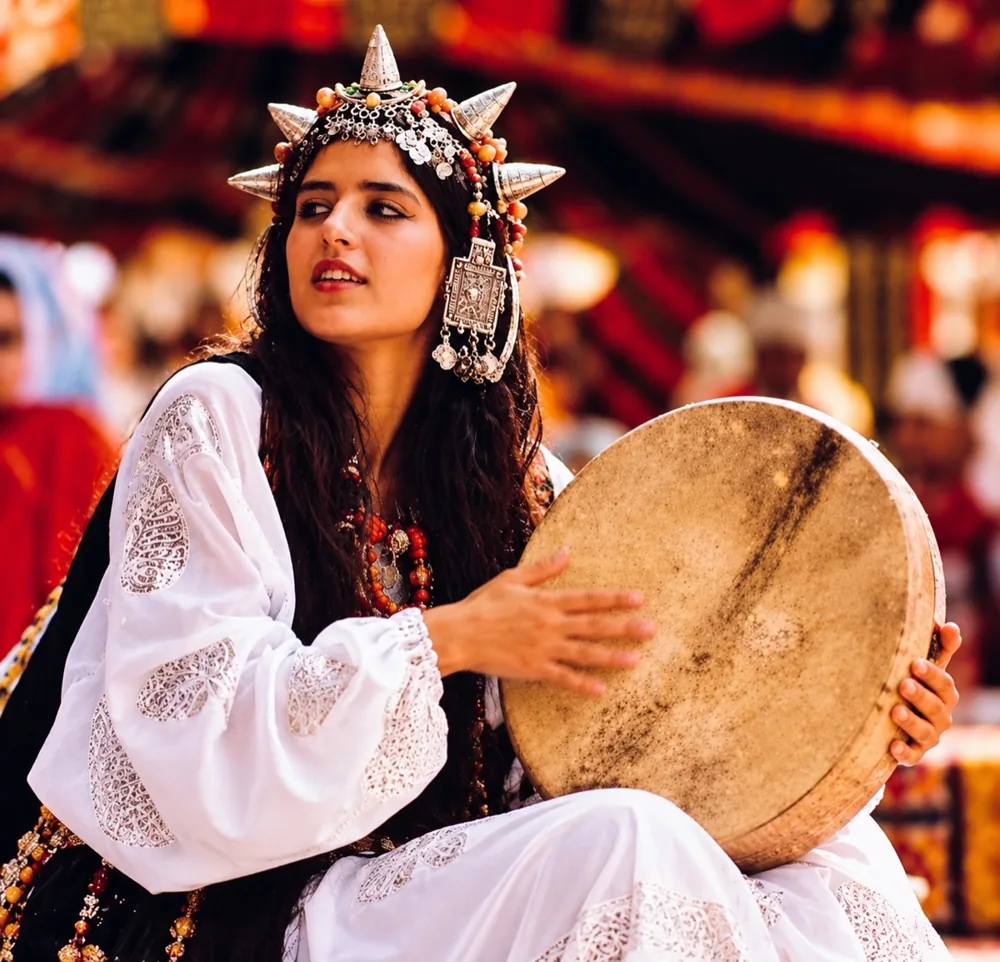
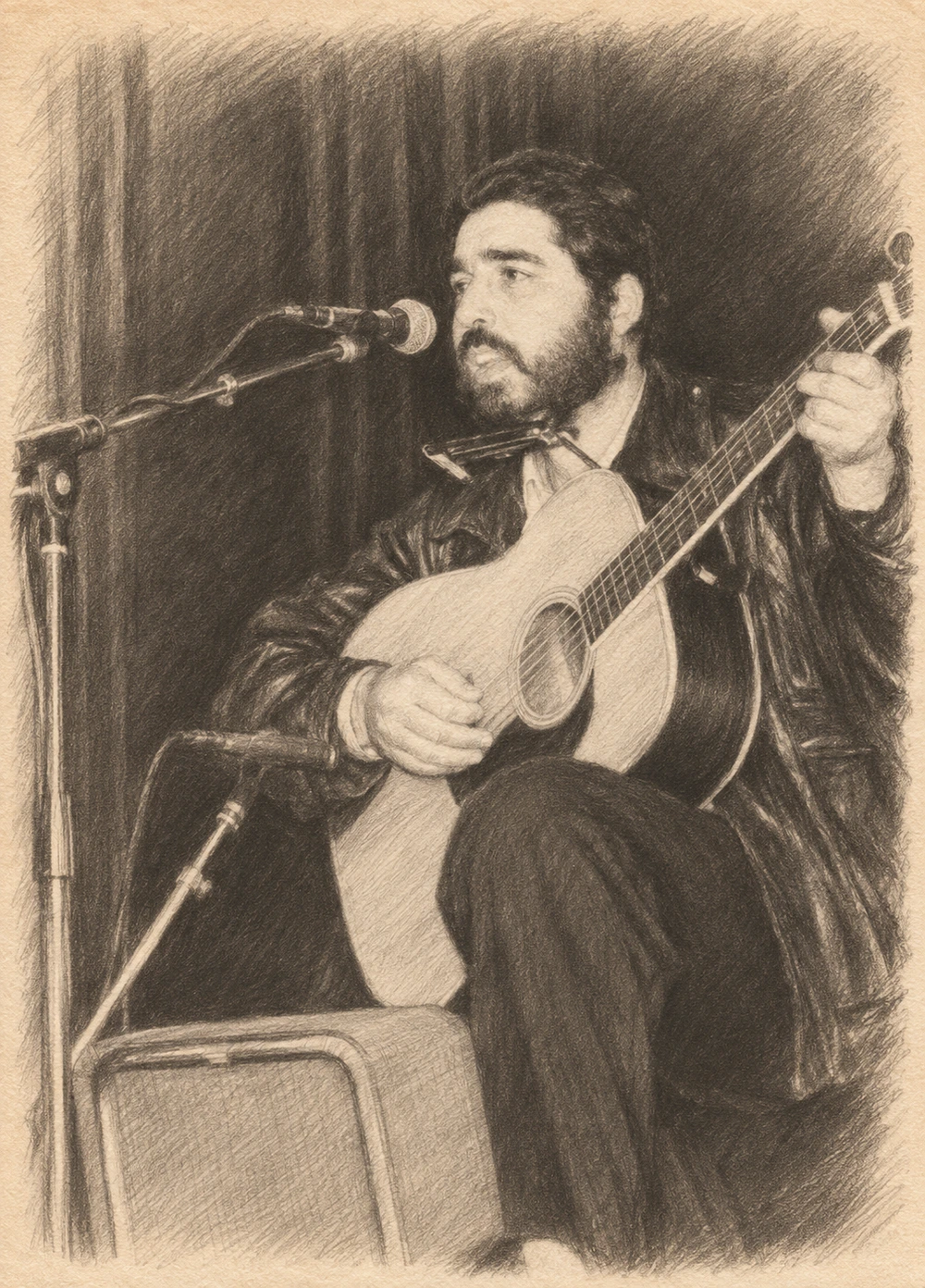
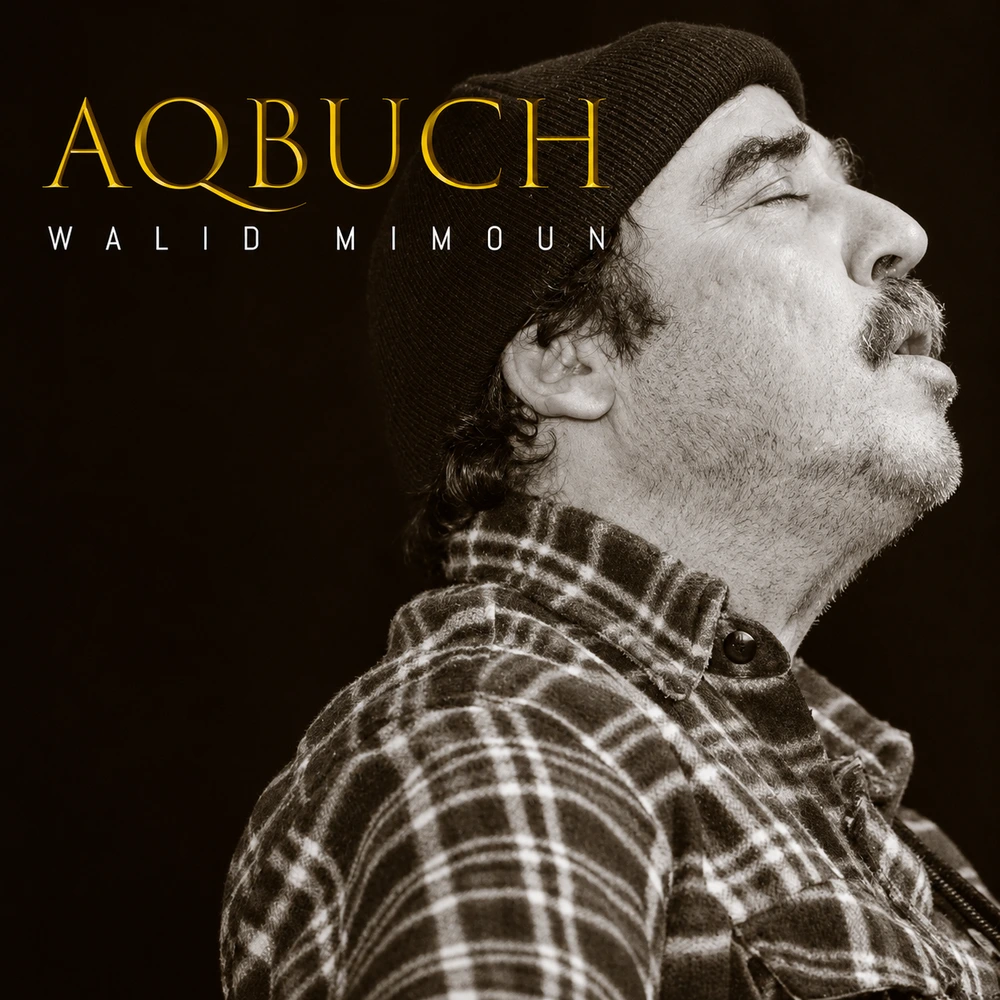
Editorial illustrations adapted from images supplied to Agraw. The early performance is presented as a drawing; the Aqbuch cover retains its original lettering.