
Some artists leave their mark through the songs that other people continue to sing. Abdeslam Achahbar belongs to that enduring musical memory of the Rif. His life was brief, and the recordings he left behind were modest. Yet his songs found listeners who carried them forward, giving a young songwriter a presence that has outlasted the circumstances in which his music was made.
Remembering him means listening beyond the limitations of a cassette: to the phrasing, the words and the imagination of a composer who could make a few chords carry considerable emotional weight.
A young voice from the Rif
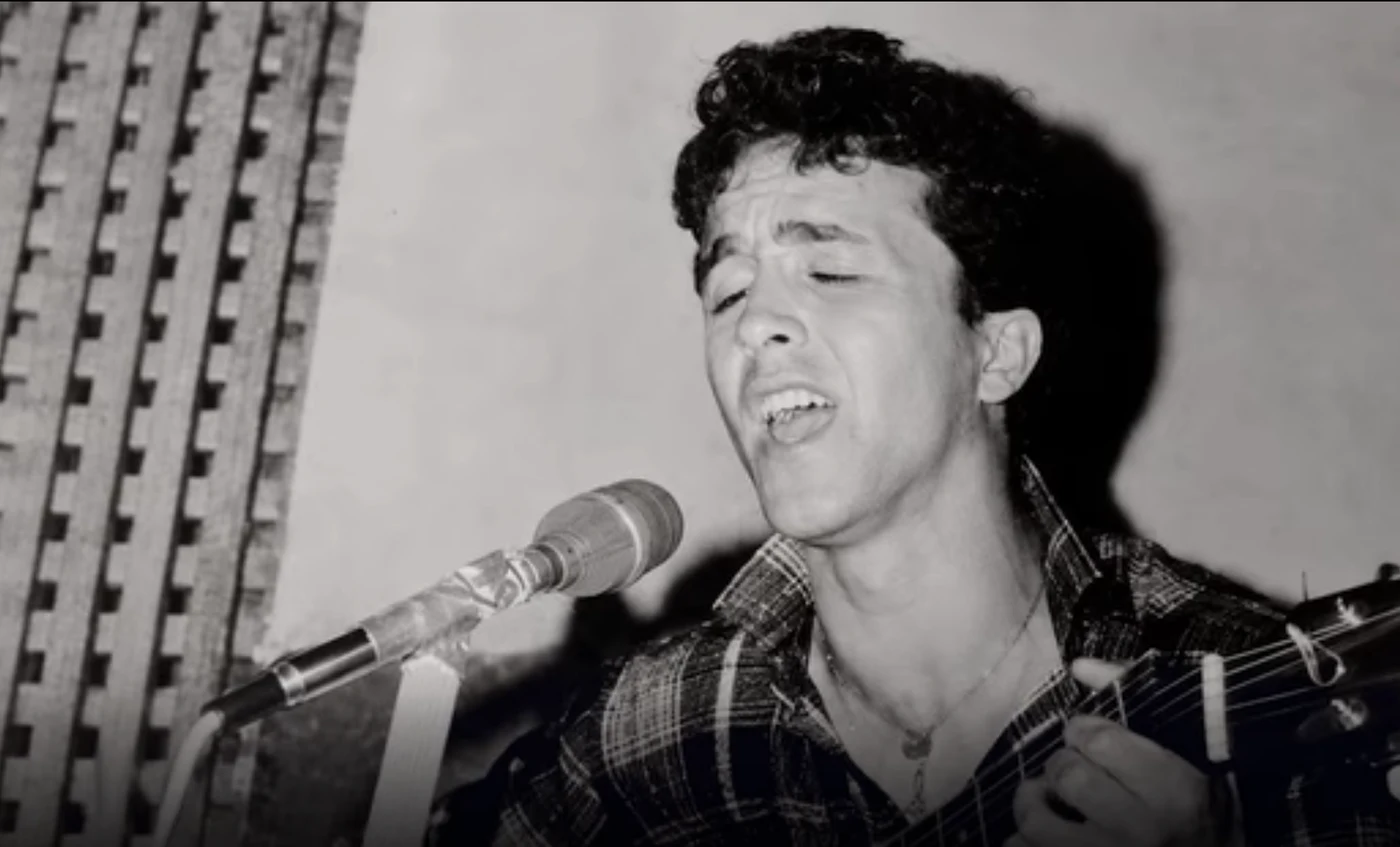
Born in Al Hoceima in 1969, Achahbar is remembered as a singer, composer and guitarist associated with socially engaged Rifian song. Several recollections in the comments beneath Cap Radio Maroc’s report recall his maritime vocational training and his work as a fisherman. The sea was part of his working life before it became the place of his disappearance. He went missing during a Mediterranean crossing towards Spain in 1992 and is believed to have drowned. He was only in his early twenties.
That loss belongs to his story, but so does the work he had already begun. A songwriter deserves to be remembered for what he made, for the choices in his music and the questions he placed before his listeners.
A small recording, a lasting presence
In the recollections shared with Agraw, Achahbar left no official studio recordings. His voice survived through private recordings made on ordinary cassette equipment. These were the means available to preserve songs that might otherwise have remained only in the memories of those who heard him.
Such recordings ask something of a listener. The sound may be imperfect; the performance comes without the polish of a studio production. But the musical idea remains available to hear. A melodic turn, the timing of a phrase or the relationship between a line of poetry and a chord can survive the hiss of tape.
For an archive, these fragile recordings deserve care. Preserving them also means remembering who wrote the songs, even when a later interpretation reaches a larger audience.
The depth within a few chords
The portrait of Achahbar passed down to Agraw is of an unusually inventive musician: an interpreter of meaningful poetry and a creator of distinctive compositions, working with simple chord structures. That simplicity was part of his expressive strength. It left room for the voice and gave the words a clear place within the song.
Among the songs associated with him is “Inasan Imidan”. The poetry he performed speaks to dignity, Amazigh identity, hope and the desire to exist on one’s own terms. Personal feeling meets the conditions of everyday life, helping explain why these songs could remain meaningful to listeners who never heard him perform.
Remembering the poet behind the words
The testimony shared with Agraw credits the poet Hassan Badich with the poem beginning “Ouma outqnid chi”, discussed in these recollections, and with “Moulay Mohand”. Remembering Achahbar’s musical contribution also means recognising that literary authorship. The singer’s interpretation, the composition and the poem each have a place in the history of a song.
The same account draws attention to words whose meaning can be blurred in transcription. “Thsiri” refers to a traditional kind of footwear made from palm leaves, remembered locally as thikhzdhent. “Khourazi” refers to hunger: in this reading, a hunger for culture, identity and recognition. These details bring everyday Rifian life into the poem and give its appeal a more precise meaning.
A few lines, carried into English
The opening appeal supplied to Agraw can be rendered freely in English as:
“Brother, do not despair.
Put on your sandals.”
The address begins close to the listener, with a brother and an ordinary object. In the explanation shared with Agraw, the sandals were a familiar form of footwear woven from palm leaves. Read in that setting, the invitation to put them on suggests preparing to move, to take a step, to continue despite discouragement. This is an interpretation of the image rather than an additional line of the poem.
Another line in the supplied recollection can be rendered:
“You went to the marabouts
and asked them about hunger.”
Here, the explanation of “khourazi” matters. The hunger described in the recollection is a longing for culture and identity: the feeling of not yet having had one’s fill of a language, a history or a recognised place in the world. Reading the line that way gives the image a reach beyond physical need.
These are short, free English renderings of the wording shared with Agraw, rather than a complete or definitive translation. They belong to the poem credited in that account to Hassan Badich and performed by Achahbar. Keeping both names in view allows us to appreciate the meeting of poetry and music without confusing the author of the words with the voice that carried them.
Imetlaa: an album of tribute and remembrance
Imetlaa, a well-known Rifian band whose members live in the Netherlands, paid tribute to Achahbar through a released album. As recalled in the account shared with Agraw, the band explicitly credited him and included his photographs with the release, placing his memory at the heart of their tribute.
Their interpretations helped carry his music to further audiences while honouring the artist behind it. The album brought together performance, acknowledgement and remembrance, offering listeners a way to discover Achahbar through a band with an important place in Rifian music. Alongside other artists who have performed his songs, Imetlaa contributed to keeping his musical legacy alive.
FROM THE ALBUM COLLECTION
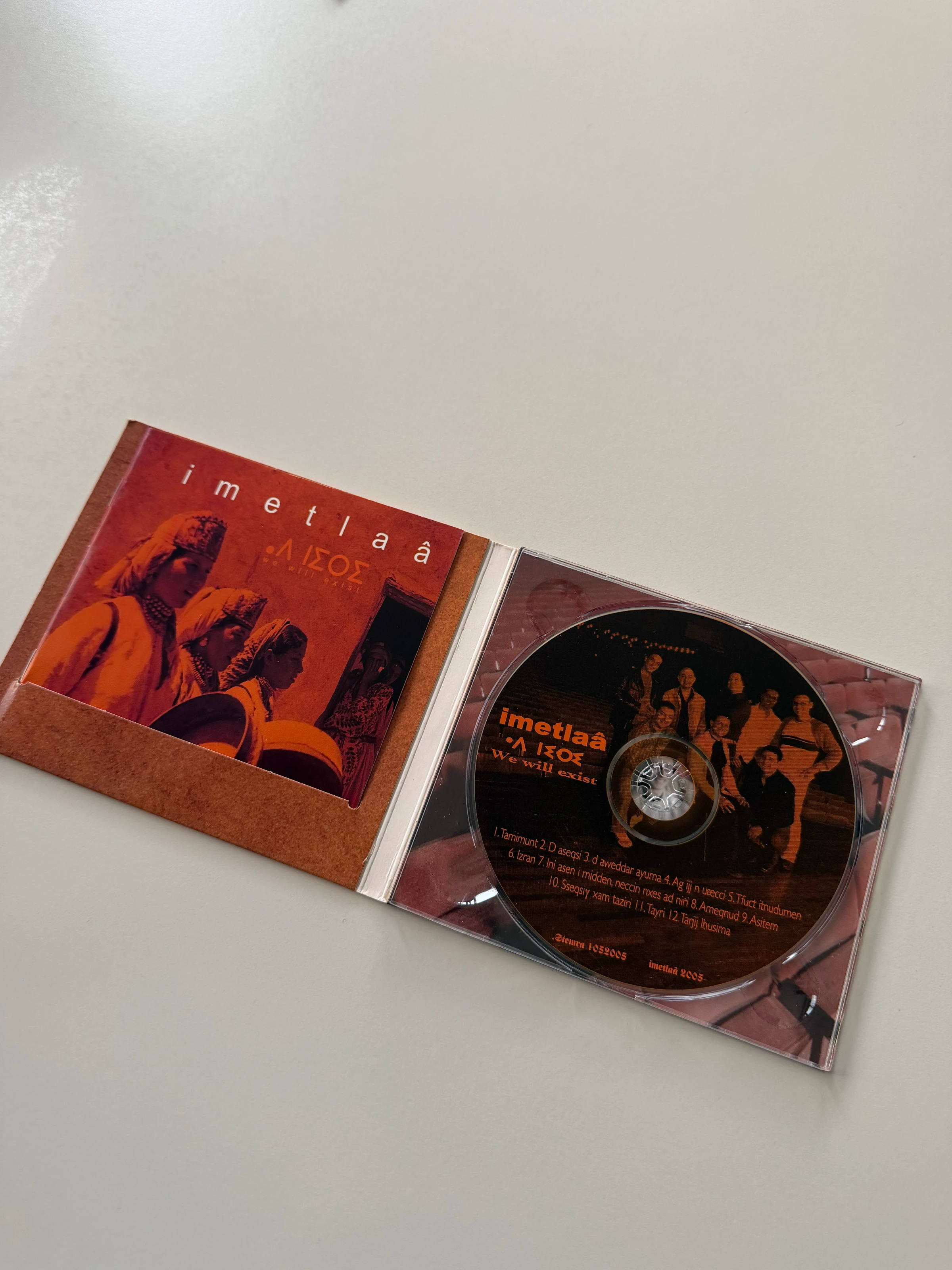
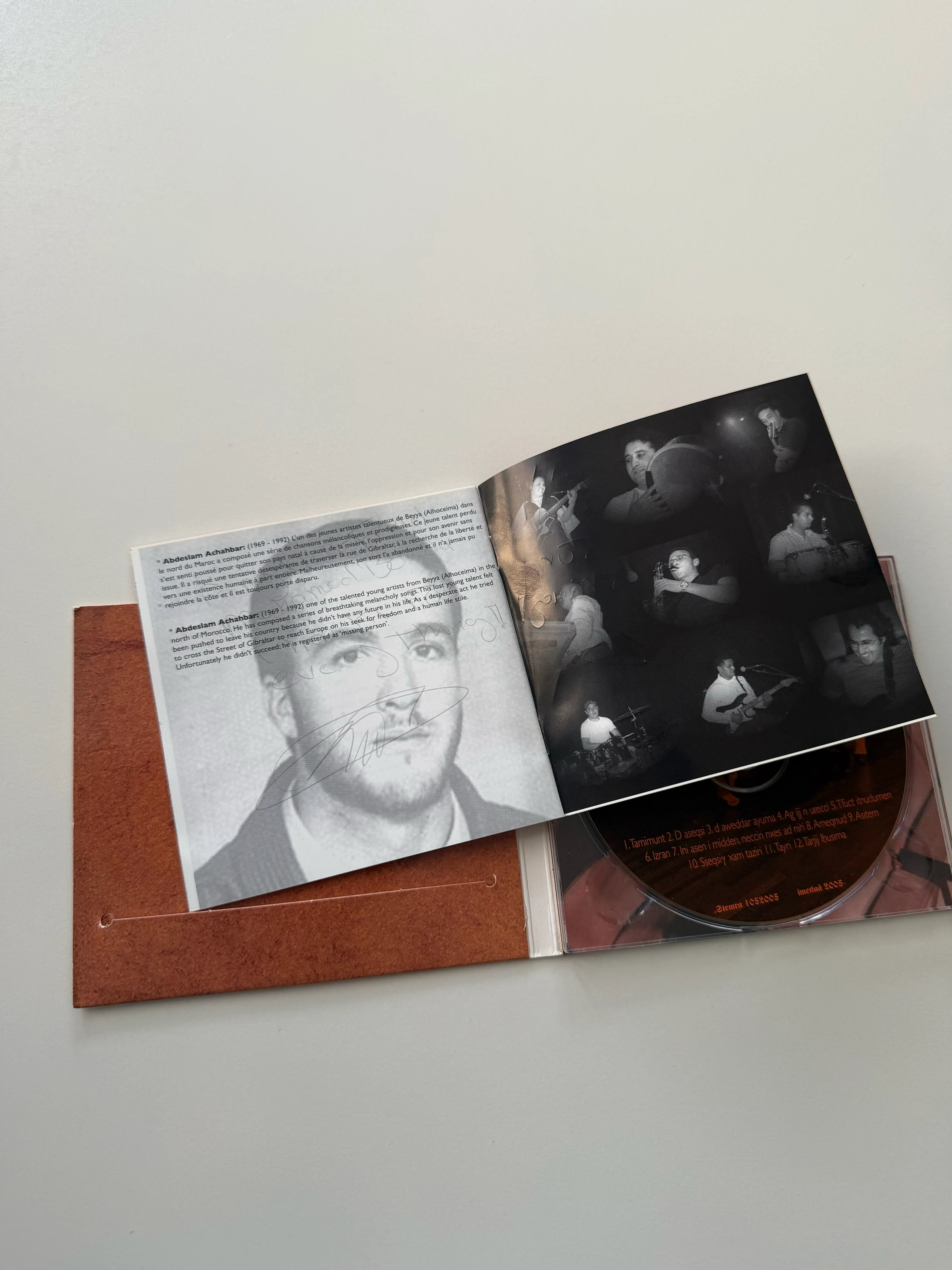
Original album photographs supplied to Agraw.
A family thread in Rifian music
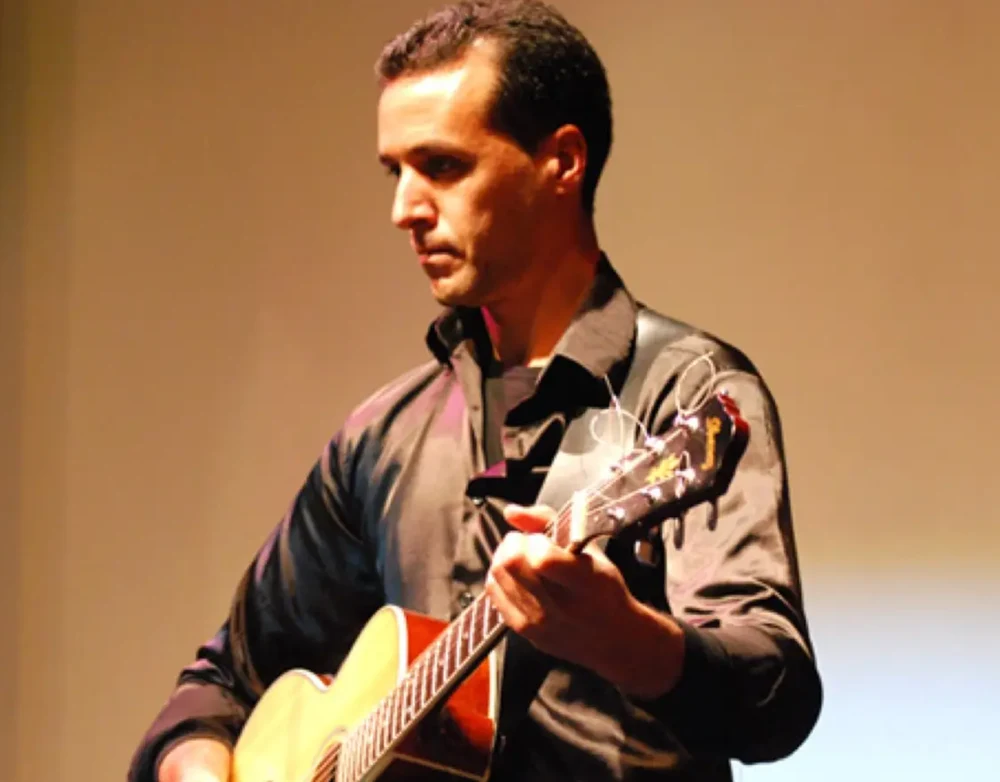
The memories shared with Agraw also place his brother, Abdelfattah Achahbar, within this musical history. A member of Tifyur, Abdelfattah is remembered for his role in creating “Rhenni”, which became a successful song. It is a separate contribution, and one worth naming clearly alongside the work of Abdeslam.
Together, these recollections point towards a musical history preserved through families, fellow musicians, cassettes and the people who keep listening. Much of that history still needs to be documented with the care usually given to formal releases.
Remembered by the people who knew him
The comments accompanying Cap Radio Maroc’s report offer small but revealing glimpses of Achahbar’s life. Several contributors remember his maritime training or working alongside him on fishing boats. Their accounts place the musician within a working community, with routines and friendships beyond his songs.
Mohamed Benhamou recalls being welcomed into Achahbar’s home to play guitar together, as well as making music with him outside the house. It is a particularly valuable memory because it brings us close to the everyday setting in which music was shared: friends, instruments and time spent playing together.
Other contributors remember his kindness and modesty. One describes him as a musical school in his own right, recalling learning music and being influenced by his singing style. These are personal recollections, rather than a formal record of his career, but they give substance to the idea that his influence continued through the people who heard and played with him.
Read together, the tributes preserve more than a reputation. They remember a colleague on a boat, a friend opening his home and a musician whose way of singing stayed with others.
An unfinished life, a continuing song
Achahbar left too early. What remains is an invitation to pay attention: to a voice heard through old tape, to compositions taken up by later artists, and to the listeners who recognised something lasting in them.
His recordings preserve the work of a young man whose future was cut short. Hearing them today gives that work another moment in the present, and gives his name a place beside the songs he left behind.
Listen to Abdeslam Achahbar on Agraw ↗
Biographical reference: Arabic Wikipedia. Personal recollections are drawn from comments supplied to Agraw from Cap Radio Maroc’s report, alongside information shared with Agraw about private recordings, later interpretations, Hassan Badich’s poetry, word meanings and Abdelfattah Achahbar. The exact crossing date and survivor count are omitted because accounts differ. Photograph supplied to Agraw.