

For a child who has been left behind, a cinema can become more than a place to watch stories. It can offer another way of imagining life. In Adios Carmen, Mohamed Amin Benamraoui brings that possibility into the Rif, where a boy’s loneliness meets the kindness of a woman living far from her own country.
A friendship in a changing Rif
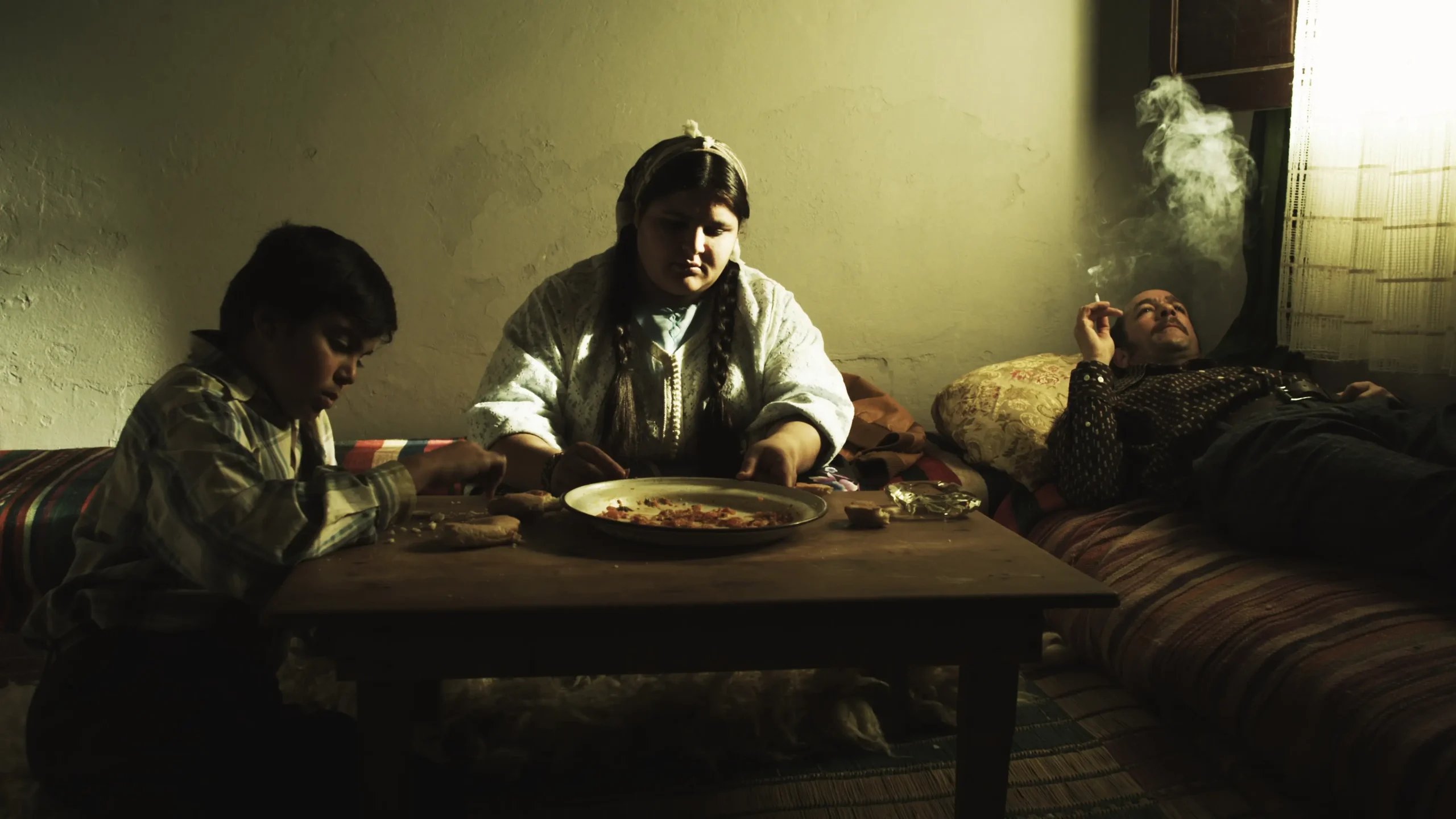
Set in northern Morocco in 1975, the film follows Amar, a young boy living with a violent uncle after his mother leaves for Belgium. His life changes when he befriends Carmen, a Spanish exile who works at the local cinema. Through her, he encounters the worlds that unfold on its screen.
As the official synopsis makes clear, this friendship develops against a shifting political landscape. Franco’s death and the possibility of Carmen’s return to Spain bring the larger world into a relationship that has become important to Amar. The story places departure on both sides of the Mediterranean: one person longs for someone to come back, while another may finally be able to go home.
Watch the trailer
The trailer offers an introduction to Amar’s world and the encounter at the heart of the film.
Amazigh voices on the cinema screen
Adios Carmen is a 2013 drama whose original languages include Amazigh from the Rif and Spanish. Its setting is more than a backdrop: these languages place the story within the everyday cultural life of northern Morocco and its connections across the sea.
For Agraw, that makes the film a work worth returning to. A culture becomes visible through more than descriptions of its customs. It also becomes visible through fictional lives: a child waiting, a household under strain, a friendship that opens an unexpected door. Such stories invite audiences to recognise people before reducing them to a place or an identity.
The people behind the film
Written and directed by Mohamed Amin Benamraoui, Adios Carmen was produced by Taziri Productions, Azir Productions and Thank You & Good Night Productions. The Centre Cinématographique Marocain lists a running time of 103 minutes, cinematography by Ivan Oms Blanco, editing by France Duez and music by Khalid Izri.
The cast includes Amanallah Benjilali and Paulina Gálvez, alongside Said Marssi and Juan Estelrich. The Institut du monde arabe identifies the film as Benamraoui’s first feature. Born in Nador, the filmmaker moved to Brussels in the 1980s and later studied cinema there—a trajectory that connects the Rif and the diaspora in his own life as well as in his work.
A story that travelled
Azir Productions records a Special Jury Mention at the Dubai International Film Festival in 2013 and a First Film Award at Morocco’s National Film Festival in Tangier in 2014. These distinctions form part of the film’s journey beyond the place in which its story is rooted.
With its Amazigh and Spanish voices, Adios Carmen offers a story rooted in the Rif and open to the world. Its friendship between a child and an exile makes cinema a meeting place: somewhere to discover another life, and to imagine a different one.
Film information and promotional still: Azir Productions. Technical credits: Centre Cinématographique Marocain. Director background: Institut du monde arabe. Trailer: Filmexport.