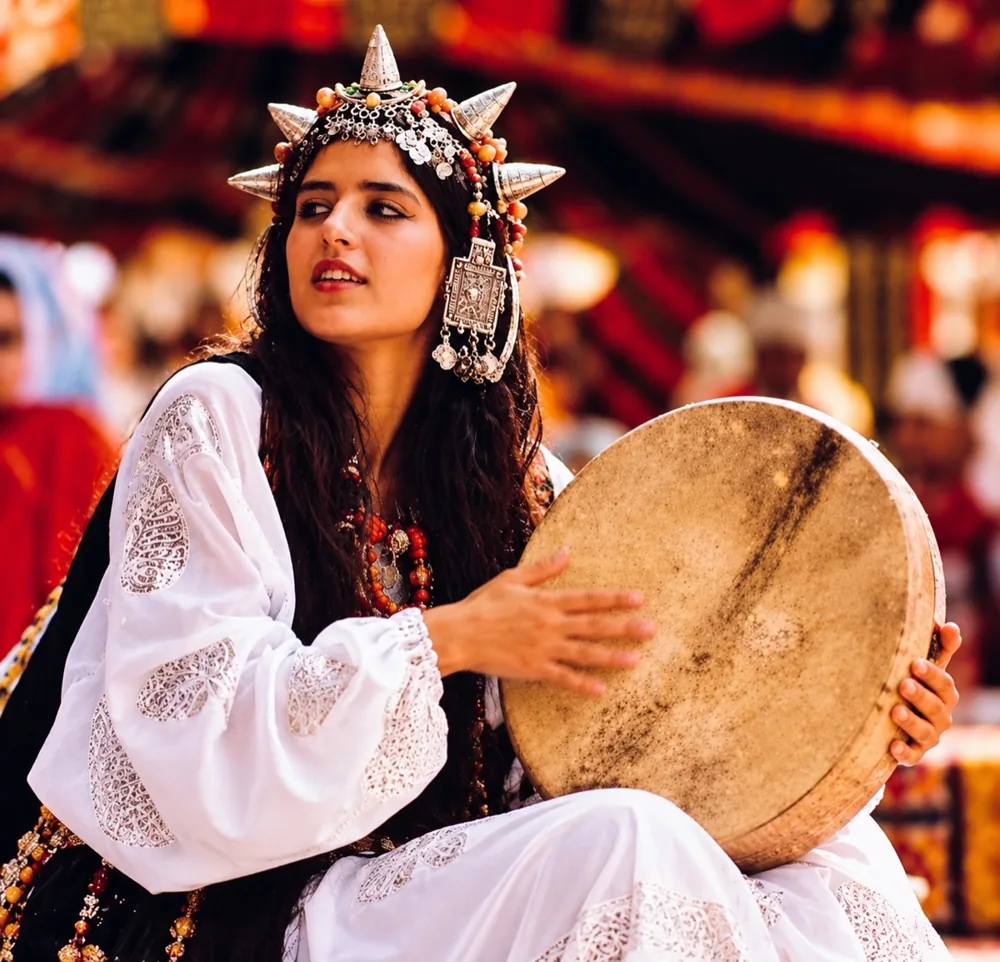

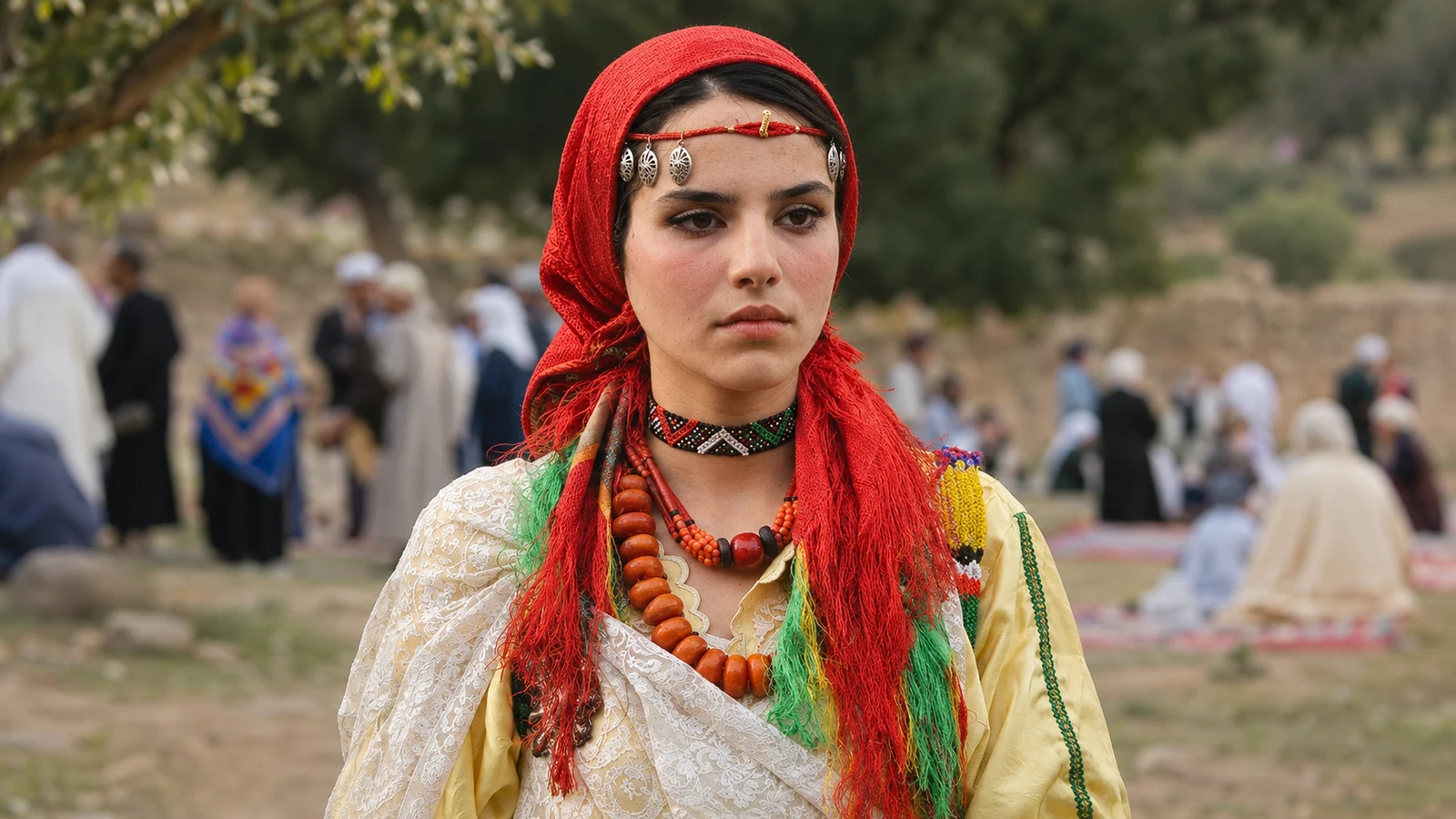
A red scarf, a line of silver ornaments, a melody recognised before its first words: a culture can announce itself through small details. Yet no single portrait, costume or song can contain the Amazigh experience in Morocco. Its richness lies in the different ways people speak, create, remember and make a place their own.
To encounter that culture is to meet people living in the present. Heritage may be inherited, but its future depends on the choices made with it: a language spoken to a child, a recording carefully preserved, a craft learned well enough to be carried forward.
A name, and room for many identities
Amazigh, with the plural Imazighen, is the name many indigenous North Africans use for themselves. The older label “Berber” remains common in books, museum collections and travel writing. Using Amazigh places people’s own name at the centre of the conversation.
In Morocco, that conversation has many voices. Family histories, regional attachments and personal relationships with language differ. Someone may grow up speaking an Amazigh variety every day; another may begin learning as an adult. Both experiences deserve room. Cultural belonging cannot be read from a person’s clothes or reduced to a single test of fluency.
Language: familiar words, a public presence
Tarifit, Tamazight and Tachelhit are three major varieties discussed in Morocco’s Amazigh linguistic landscape. Tarifit is associated with the north and the Rif; Tamazight with central Morocco and parts of the Atlas; Tachelhit with the south-west and parts of the High Atlas. These are broad descriptions, with local differences and connections that a simple map cannot fully express.
Language carries more than information. The sound of a greeting, the timing of a joke and the words chosen in a song can hold a closeness that translation only partly conveys. Recording those expressions matters, as does creating opportunities to use them in ordinary life.
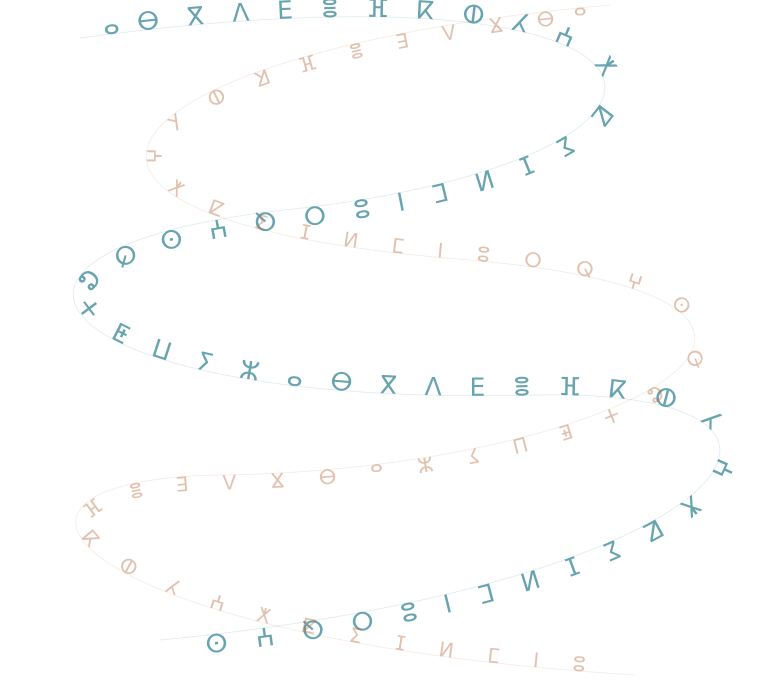
Morocco’s 2011 Constitution recognised Amazigh as an official language alongside Arabic. Tifinaghe-IRCAM, adopted in 2003, gives contemporary teaching and publishing a standardised alphabet. A script becomes familiar through use: reading a sign, writing a name, recognising a word that once seemed unfamiliar. On Agraw, our introductory Tifinagh page offers a place to begin.
Dress and adornment: look closely, name carefully
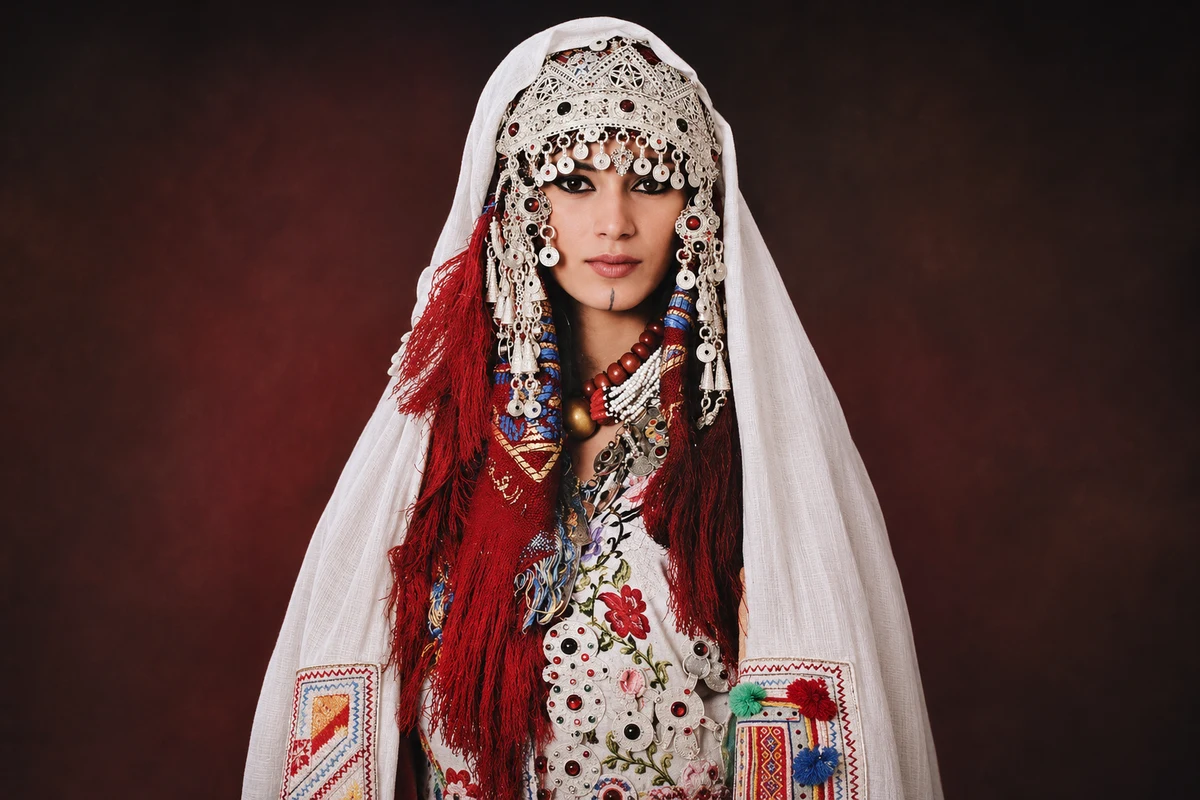
The portraits accompanying this article invite attention to materials: the light caught by silver ornaments, the texture of a woven scarf, the contrast between beads and cloth. Such details deserve to be seen with care rather than treated as interchangeable decorations.
There is no single outfit that represents every Amazigh community. A photograph without a reliable caption cannot tell us everything about a garment’s origin, the occasion on which it was worn or the person wearing it. Appreciating its beauty should leave space for those unanswered questions. Asking who made something, where it was worn and how its owner describes it brings us closer to the people behind the image.
Knowledge held in hands and landscapes
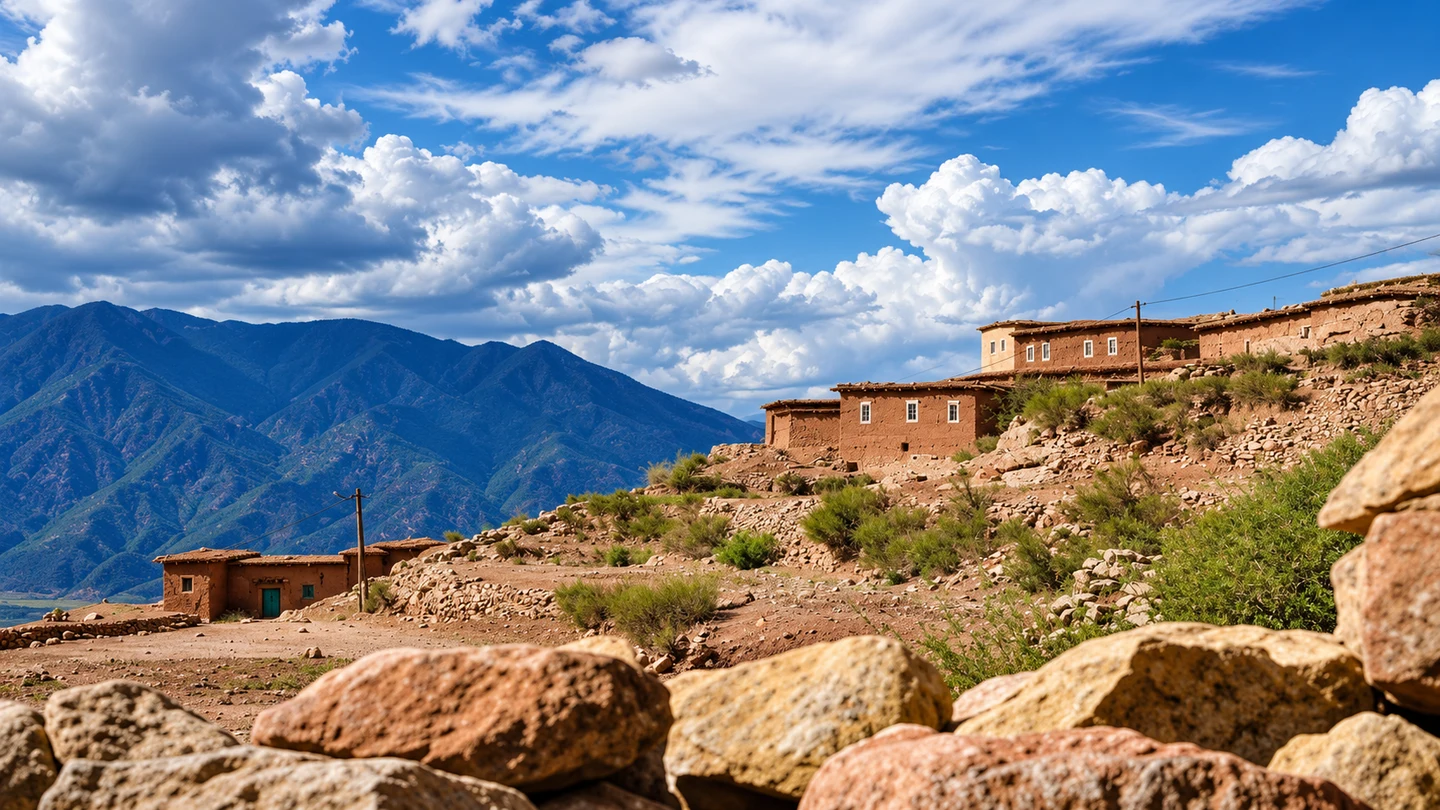
A mountain village offers another way of thinking about heritage. In the accompanying illustration, earthen buildings sit against a steep hillside, with paths, stone and vegetation forming the spaces between them. The scene asks us to look beyond a picturesque view and consider the daily work of inhabiting a landscape.
One well-documented example of knowledge passed between generations concerns the argan tree in south-west Morocco. UNESCO’s account describes practices that include oil extraction, the making of tools and the uses of the oil. Women play a central role in transmitting that knowledge to their daughters. The practices were inscribed on UNESCO’s Representative List of the Intangible Cultural Heritage of Humanity in 2014.
That recognition draws attention to something easy to overlook: expertise can be held in a sequence of gestures as well as in a written text. Understanding a material, knowing when to act and learning from someone experienced are forms of education in their own right.
Music that belongs to places—and travels
Listening also reveals differences that a broad cultural label can conceal. A useful example is Taskiwin, the dance and song tradition documented by UNESCO among communities on the northern and southern slopes of the western High Atlas, in Taroudant province. Naming a tradition and its communities gives a listener more to understand than a general description of “traditional music”.
Agraw’s music collections offer another route into that variety. Moving between the Rif, Middle Atlas, High Atlas and other regions is an invitation to listen closely to individual artists. An old recording and a new interpretation can sit beside one another, each offering a different relationship with memory. The archive grows more valuable when names, song titles and the circumstances of recordings remain attached to the sound.
Explore Amazigh music by region ↗
A culture with a future tense
The task is larger than keeping beautiful objects or saving familiar songs. It includes making space for new writing, new listeners and new ways of learning. A young person should be able to encounter heritage as something they can participate in, rather than a completed story they are only allowed to admire.
For Agraw, that begins with attention: to the name of an artist, the voice of a speaker, the work of a craftsperson and the details that make one place distinct from another. Amazigh culture lives through those relationships. Its continuity is something people make, together, every day.
IRCAM — Missions and the official status of Amazigh · IRCAM — Tifinagh and its adoption in 2003 · IRCAM — Research on Morocco’s three major Amazigh varieties · UNESCO — Argan practices and know-how · UNESCO — Taskiwine, dance and songs of the western High Atlas
Illustrations recreated from photographs supplied to Agraw.